
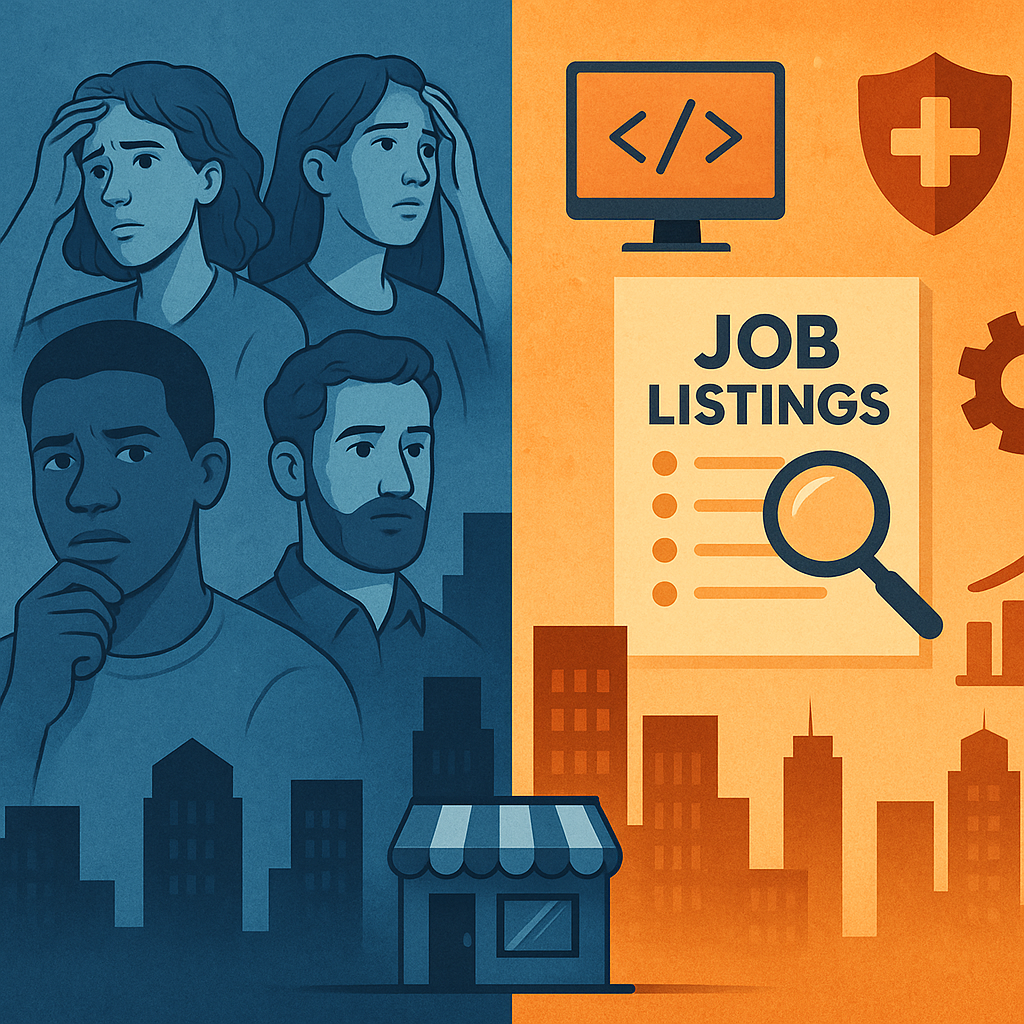
At first glance, this looks contradictory. In reality, it’s a classic case of structural imbalance and it is small and medium-sized enterprises (SMEs) that are feeling the sharpest edge of this disruption.
The vacancies Germany struggles to fill are disproportionately in high-skill, regulated, or certification-heavy roles while many job seekers do not have the specific technical qualifications those roles require.
This is especially visible in sectors such as IT, healthcare, social services, and engineering (Reuters).
Germany’s workforce is shrinking as retirements accelerate. Estimates suggest ~340,000 to 470,000 more people leave the workforce each year than enter it .
That’s not a temporary dip, it’s a structural trend that affects planning, productivity, and continuity.
With broader economic slowdown, hiring reduces in areas like manufacturing and construction . So while some sectors freeze recruitment, others face acute shortages creating a labour market where “available talent” and “available jobs” don’t meet.
Job openings are often concentrated in regions or segments that don’t match where job seekers live or what they’re trained to do.
Even when employers are ready to hire internationally, complex and slow immigration processes , combined with language requirements , delay onboarding and reduce conversion from offer to joining (EURES).
------------
Shortages are most acute in:
Meanwhile, some sectors show labour surplus (e.g., certain logistics and mining segments), reinforcing the “mismatch” story rather than a simple “not enough people” story.
----------------------
Large corporations often have advantages SMEs simply can’t match:
SMEs, on the other hand, operate with tighter margins and smaller teams. When a key nurse, technician, developer, or engineer role stays vacant:
In short: the same “delay” that is inconvenient for large firms can be existential for SMEs.
----------------------
Labour authorities do not expect a quick turnaround, and 2026 is projected to remain challenging (Reuters).
That means employers especially SMEs need a strategy that is:
At Accel Skill , we look at Germany’s labour paradox through a practical lens:
Vacancies aren’t just “open roles.” They are business risk.
And SMEs need reliable, job-ready talent pipelines that reduce friction in the hiring journey.
Most importantly, we position international hiring not as a one-off “recruitment event,” but as a repeatable SME talent strategy so smaller employers can compete sustainably.
--------------------
If Germany’s 2026 labour market teaches us one thing, it’s this: unemployment numbers alone don’t solve vacancies skills alignment does.
Germany’s labour paradox is not just a statistic it’s a signal that the market has changed. The winners in 2026 will be those who build structured, cross-border, skills-first talent pipelines, especially for the sectors that keep society running.
And because SMEs are the most exposed to hiring delays, they also have the most to gain from ethical, high-quality international workforce partnerships